 Image 1 of 1
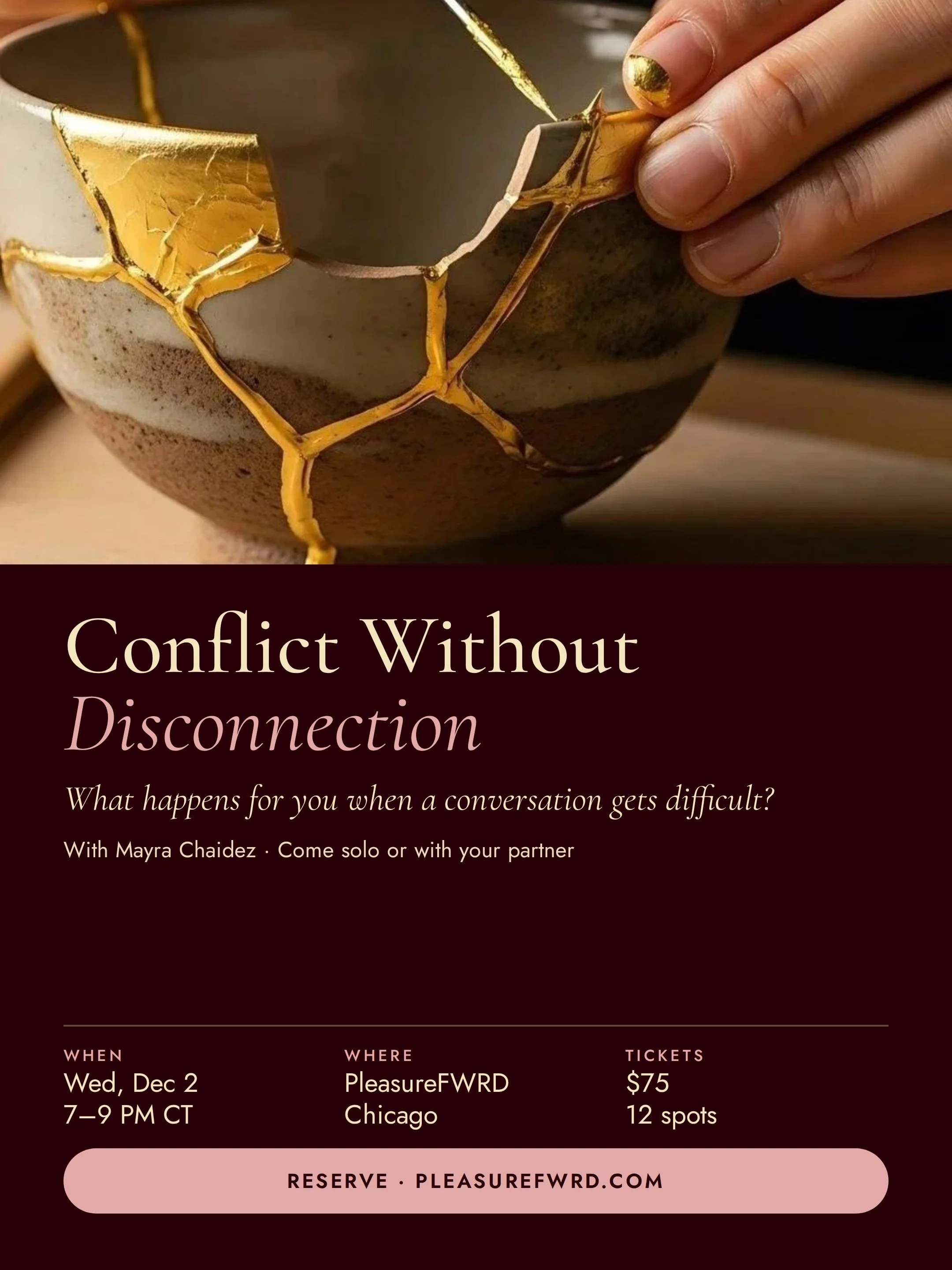
Conflict Without Disconnection™ | Wednesday, December 2, 2026 · 7:00–9:00 PM CT
Conflict Without Disconnection™
The Experience
Conflict does not have to mean the relationship is failing.
Disagreement is a natural part of being close to another person. What often creates lasting disconnection is not the conflict itself, but what happens when defensiveness, criticism, avoidance, escalation, or the need to be right takes over.
Conflict Without Disconnection™ is an interactive relationship workshop designed to help you understand what happens inside you during difficult conversations and practice responding with greater awareness, honesty, and care.
Rather than teaching you to avoid conflict or remain calm at all costs, this experience helps you recognize your patterns, communicate what matters, and stay connected to yourself while engaging with someone whose perspective may be different from yours.
The goal is not perfect communication.
It is greater capacity to pause, listen, speak clearly, and find your way back to connection.
You’ll Experience
🌿 Arriving & Relational Grounding
Begin with a present-moment check-in to notice how your body responds when you imagine disagreement, tension, or misunderstanding.
You will identify personal cues that may signal activation, withdrawal, defensiveness, or the need for a pause.
🔄 Understanding Your Conflict Pattern
Explore common responses to conflict, such as pursuing, withdrawing, appeasing, becoming defensive, overexplaining, shutting down, or trying to solve the problem immediately.
You will be invited to recognize your patterns with curiosity rather than shame and consider what those responses may be trying to protect.
🗣️ Speaking From Your Experience
Practice communicating without blame by separating observations, interpretations, emotions, needs, and requests.
You will experiment with language that helps you express what is happening for you without claiming to know another person’s intentions.
👂 Listening Without Self-Abandonment
Explore how to remain curious about another person’s experience without automatically agreeing, fixing, defending yourself, or dismissing your own perspective.
Listening is presented as a relational skill—not as permission for disrespect or an obligation to stay in an unsafe conversation.
⏸️ The Conscious Pause
Learn how to recognize when a conversation needs to slow down.
You will create language for requesting a pause, identifying what you need during that time, and making a clear agreement about when the conversation may resume.
A pause is not punishment, abandonment, or avoidance when it includes communication and a plan to return.
🤝 Practicing a Different Conversation
Through fictional scenarios, written reflection, and optional structured exercises, you will practice naming a concern, listening for meaning, making a request, setting a boundary, or responding to disagreement.
Participants attending with an established partner may choose to practice together. Those attending independently can participate through individual reflection, observation, or fictional role-play.
No one is required to discuss an active conflict or reveal private relationship details.
✍️ Reflection & Integration
Close by identifying one conflict pattern you want to notice earlier and one communication practice you would like to carry into your relationships.
You May Leave With
Greater awareness of your personal conflict responses
Language for expressing concerns without blame or mind-reading
Tools for requesting a pause without abandoning the conversation
A clearer distinction between listening, agreeing, and self-abandonment
Greater confidence making specific, respectful requests
A personal plan for approaching difficult conversations differently
Good to Know
Designed For
Women and femme-aligned adults, ages 18+
You may attend independently or with an established partner. Partners of any gender are welcome when attending together and aligned with the agreements and purpose of the space.
Experience Level
Open to all. No previous experience with relationship coaching or communication workshops is necessary.
Participation
Every exercise is optional and may be modified, observed, or declined. You will not be required to reveal private details, reenact a painful conflict, or resolve an active relationship issue during the workshop.
Touch
This experience does not include facilitator touch, participant-to-participant touch, massage, intimate or erotic contact, nudity, or sexual activity.
Any practice between established partners is conversational and may be paused or declined by either person at any time.
A Note About Emotional & Relational Safety
Mayra facilitates through a trauma-informed lens and can hold grounded, compassionate space for emotions that may arise. Participants are encouraged to remain connected to their boundaries, choices, and individual pace.
Conflict Without Disconnection™ is designed for educational exploration and skills practice. It is not couples therapy, psychotherapy, mediation, trauma treatment, domestic-violence intervention, legal advice, or crisis support.
This workshop is not appropriate for practicing conflict skills with someone you fear or with whom disagreement may lead to intimidation, coercion, retaliation, stalking, or violence. Communication tools cannot make an abusive dynamic safe. Individualized support from a qualified domestic-violence professional or licensed mental-health provider may be more appropriate in those circumstances.
Connection does not require agreement.
It asks for honesty, curiosity, boundaries, and a willingness to return.
Conflict Without Disconnection™
The Experience
Conflict does not have to mean the relationship is failing.
Disagreement is a natural part of being close to another person. What often creates lasting disconnection is not the conflict itself, but what happens when defensiveness, criticism, avoidance, escalation, or the need to be right takes over.
Conflict Without Disconnection™ is an interactive relationship workshop designed to help you understand what happens inside you during difficult conversations and practice responding with greater awareness, honesty, and care.
Rather than teaching you to avoid conflict or remain calm at all costs, this experience helps you recognize your patterns, communicate what matters, and stay connected to yourself while engaging with someone whose perspective may be different from yours.
The goal is not perfect communication.
It is greater capacity to pause, listen, speak clearly, and find your way back to connection.
You’ll Experience
🌿 Arriving & Relational Grounding
Begin with a present-moment check-in to notice how your body responds when you imagine disagreement, tension, or misunderstanding.
You will identify personal cues that may signal activation, withdrawal, defensiveness, or the need for a pause.
🔄 Understanding Your Conflict Pattern
Explore common responses to conflict, such as pursuing, withdrawing, appeasing, becoming defensive, overexplaining, shutting down, or trying to solve the problem immediately.
You will be invited to recognize your patterns with curiosity rather than shame and consider what those responses may be trying to protect.
🗣️ Speaking From Your Experience
Practice communicating without blame by separating observations, interpretations, emotions, needs, and requests.
You will experiment with language that helps you express what is happening for you without claiming to know another person’s intentions.
👂 Listening Without Self-Abandonment
Explore how to remain curious about another person’s experience without automatically agreeing, fixing, defending yourself, or dismissing your own perspective.
Listening is presented as a relational skill—not as permission for disrespect or an obligation to stay in an unsafe conversation.
⏸️ The Conscious Pause
Learn how to recognize when a conversation needs to slow down.
You will create language for requesting a pause, identifying what you need during that time, and making a clear agreement about when the conversation may resume.
A pause is not punishment, abandonment, or avoidance when it includes communication and a plan to return.
🤝 Practicing a Different Conversation
Through fictional scenarios, written reflection, and optional structured exercises, you will practice naming a concern, listening for meaning, making a request, setting a boundary, or responding to disagreement.
Participants attending with an established partner may choose to practice together. Those attending independently can participate through individual reflection, observation, or fictional role-play.
No one is required to discuss an active conflict or reveal private relationship details.
✍️ Reflection & Integration
Close by identifying one conflict pattern you want to notice earlier and one communication practice you would like to carry into your relationships.
You May Leave With
Greater awareness of your personal conflict responses
Language for expressing concerns without blame or mind-reading
Tools for requesting a pause without abandoning the conversation
A clearer distinction between listening, agreeing, and self-abandonment
Greater confidence making specific, respectful requests
A personal plan for approaching difficult conversations differently
Good to Know
Designed For
Women and femme-aligned adults, ages 18+
You may attend independently or with an established partner. Partners of any gender are welcome when attending together and aligned with the agreements and purpose of the space.
Experience Level
Open to all. No previous experience with relationship coaching or communication workshops is necessary.
Participation
Every exercise is optional and may be modified, observed, or declined. You will not be required to reveal private details, reenact a painful conflict, or resolve an active relationship issue during the workshop.
Touch
This experience does not include facilitator touch, participant-to-participant touch, massage, intimate or erotic contact, nudity, or sexual activity.
Any practice between established partners is conversational and may be paused or declined by either person at any time.
A Note About Emotional & Relational Safety
Mayra facilitates through a trauma-informed lens and can hold grounded, compassionate space for emotions that may arise. Participants are encouraged to remain connected to their boundaries, choices, and individual pace.
Conflict Without Disconnection™ is designed for educational exploration and skills practice. It is not couples therapy, psychotherapy, mediation, trauma treatment, domestic-violence intervention, legal advice, or crisis support.
This workshop is not appropriate for practicing conflict skills with someone you fear or with whom disagreement may lead to intimidation, coercion, retaliation, stalking, or violence. Communication tools cannot make an abusive dynamic safe. Individualized support from a qualified domestic-violence professional or licensed mental-health provider may be more appropriate in those circumstances.
Connection does not require agreement.
It asks for honesty, curiosity, boundaries, and a willingness to return.