 Image 1 of 1
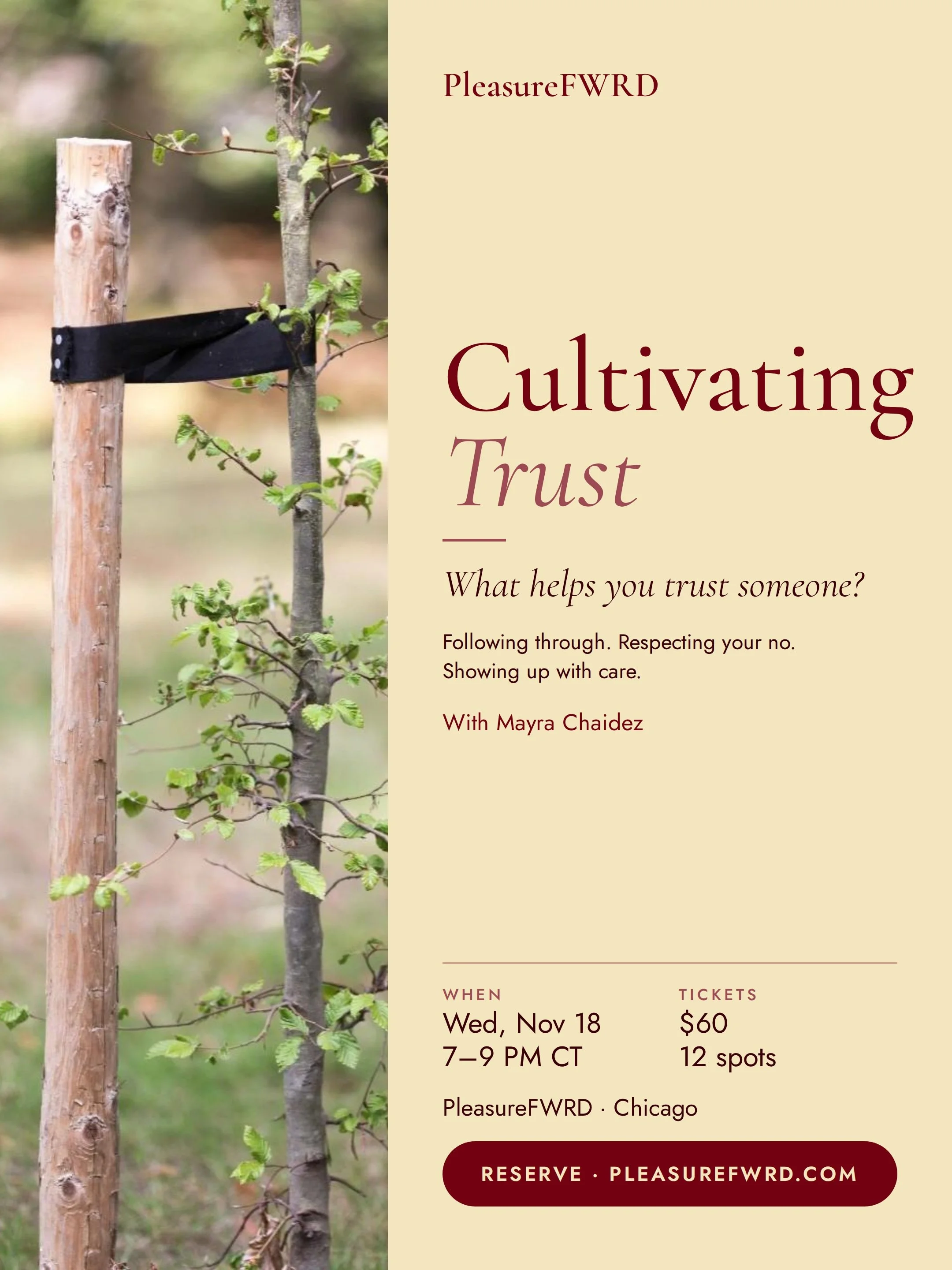
Cultivating Trust | Wednesday, November 18, 2026 · 7:00–9:00 PM CT
The Experience
Trust is rarely built through one grand gesture.
It is cultivated through ordinary moments.
Keeping your word.
Respecting a boundary.
Being honest when the truth feels vulnerable.
Following through.
Taking responsibility.
Repairing after disappointment.
Showing up consistently enough for another person to know what they can expect from you.
Cultivating Trust™ is an experiential workshop exploring how trust is built, recognized, protected, and sometimes rebuilt in relationships.
This experience is not about trusting everyone.
It is not about ignoring your instincts, forgiving before you are ready, or remaining in a relationship that does not feel respectful.
It is about developing the discernment to recognize where trust exists, where it has been damaged, what repair may require, and whether another person’s actions support continued connection.
Because trust is not simply found.
It is cultivated through honesty, boundaries, consistency, accountability, and choice.
You’ll Explore
🌱 What Trust Is—and What It Is Not
Explore trust as something created through repeated experiences rather than promises alone.
We’ll consider the difference between:
Trust and blind faith
Trust and control
Trust and certainty
Forgiveness and reconciliation
Privacy and secrecy
An apology and meaningful repair
Wanting to trust someone and having evidence that they are trustworthy
Trust does not require you to ignore discomfort or abandon your boundaries.
🤝 The Small Moments That Build Trust
Notice the everyday behaviors that may strengthen trust over time, including:
Following through
Communicating honestly
Respecting a “no”
Being emotionally present
Admitting mistakes
Protecting confidentiality
Allowing questions
Responding with care
Behaving consistently across time
You’ll reflect on which actions help you experience another person as dependable—and which actions help others experience you that way.
🌿 Trust, Discernment & the Body
Explore how you personally experience trust, caution, uncertainty, and connection.
Body awareness may offer useful information, but no single physical sensation proves that a person is safe or unsafe. We’ll hold bodily responses alongside observable behavior, context, boundaries, values, and time.
The goal is not to override your instincts or treat every uncomfortable sensation as danger.
It is to develop a more curious and discerning relationship with the information available to you.
💬 Honesty, Transparency & Consistency
Explore the conversations and agreements that help trust grow.
You may reflect on:
What honesty means in different relationships
Which agreements need to be explicit
How much transparency is appropriate
What privacy means to you
How expectations are communicated
What consistency looks like in practice
❤️ When Trust Has Been Damaged
Explore what meaningful repair may require after disappointment, dishonesty, a broken agreement, or relational rupture.
Repair may include:
Naming what happened
Listening to the impact without defensiveness
Taking responsibility
Offering a sincere apology
Making amends where possible
Changing the behavior that caused harm
Allowing trust to rebuild gradually
Accepting that reconciliation may not occur
No one is entitled to immediate forgiveness, renewed access, or restored trust.
🌸 Rebuilding Self-Trust
Trusting yourself does not mean always making the perfect decision.
It means practicing how to listen to your needs, honor your boundaries, acknowledge when something feels misaligned, and respond with care when you change your mind or make a mistake.
You’ll explore small practices for strengthening your relationship with your own choices and inner knowing.
🗺️ Create Your Trust Map™
Develop a personal reflection tool identifying:
What trust means to you
Behaviors that help trust grow
Behaviors that damage trust
Boundaries that protect trust
Agreements that need greater clarity
What meaningful repair looks like to you
Evidence you need before extending or rebuilding trust
One trust-building practice you want to carry forward
Your Trust Map™ is not an assessment of another person.
It is a guide for making more intentional relational choices.
You’ll Carry Forward
A clearer understanding of how trust is cultivated
Greater discernment between promises and trustworthy behavior
Practical ways to communicate expectations and agreements
A framework for understanding rupture, accountability, and repair
Greater awareness of how boundaries support trust
Practices for strengthening self-trust
Your personalized Trust Map™
Perfect For
Women who want to understand how trust develops in romantic, familial, platonic, professional, or community relationships.
You may attend whether you are building a new relationship, strengthening an established one, reflecting after disappointment, or exploring your relationship with self-trust.
You do not need to attend with another person.
Good to Know
Length
120 Minutes
Designed For
Women and femme-aligned adults, ages 18+
Experience Level
Open to all. No previous relationship workshop or somatic experience is necessary.
What to Bring
Journal
Water bottle
Curiosity
A willingness to reflect without forcing a particular outcome
Touch
Mayra does not provide massage, tissue manipulation, or intimate or erotic touch. This experience does not require participant-to-participant touch.
A Note About Emotional Safety
Mayra facilitates through a trauma-informed lens and can hold grounded, compassionate space for emotions that may arise.
You will never be required to disclose betrayal, trauma, abuse, infidelity, or private relationship details. Every reflection and practice may be modified, paused, or declined.
This experience does not encourage participants to rebuild trust, forgive, reconcile, or remain in relationships involving abuse, coercion, intimidation, stalking, or ongoing violations of consent and boundaries. When safety concerns are present, specialized professional support may be more appropriate.
Cultivating Trust provides relationship education, somatic awareness, reflection, and experiential learning. It is not psychotherapy, couples therapy, trauma treatment, mediation, legal advice, domestic-violence intervention, or crisis support.
Trust is not owed.
It is built, protected, and renewed through what we consistently choose.
The Experience
Trust is rarely built through one grand gesture.
It is cultivated through ordinary moments.
Keeping your word.
Respecting a boundary.
Being honest when the truth feels vulnerable.
Following through.
Taking responsibility.
Repairing after disappointment.
Showing up consistently enough for another person to know what they can expect from you.
Cultivating Trust™ is an experiential workshop exploring how trust is built, recognized, protected, and sometimes rebuilt in relationships.
This experience is not about trusting everyone.
It is not about ignoring your instincts, forgiving before you are ready, or remaining in a relationship that does not feel respectful.
It is about developing the discernment to recognize where trust exists, where it has been damaged, what repair may require, and whether another person’s actions support continued connection.
Because trust is not simply found.
It is cultivated through honesty, boundaries, consistency, accountability, and choice.
You’ll Explore
🌱 What Trust Is—and What It Is Not
Explore trust as something created through repeated experiences rather than promises alone.
We’ll consider the difference between:
Trust and blind faith
Trust and control
Trust and certainty
Forgiveness and reconciliation
Privacy and secrecy
An apology and meaningful repair
Wanting to trust someone and having evidence that they are trustworthy
Trust does not require you to ignore discomfort or abandon your boundaries.
🤝 The Small Moments That Build Trust
Notice the everyday behaviors that may strengthen trust over time, including:
Following through
Communicating honestly
Respecting a “no”
Being emotionally present
Admitting mistakes
Protecting confidentiality
Allowing questions
Responding with care
Behaving consistently across time
You’ll reflect on which actions help you experience another person as dependable—and which actions help others experience you that way.
🌿 Trust, Discernment & the Body
Explore how you personally experience trust, caution, uncertainty, and connection.
Body awareness may offer useful information, but no single physical sensation proves that a person is safe or unsafe. We’ll hold bodily responses alongside observable behavior, context, boundaries, values, and time.
The goal is not to override your instincts or treat every uncomfortable sensation as danger.
It is to develop a more curious and discerning relationship with the information available to you.
💬 Honesty, Transparency & Consistency
Explore the conversations and agreements that help trust grow.
You may reflect on:
What honesty means in different relationships
Which agreements need to be explicit
How much transparency is appropriate
What privacy means to you
How expectations are communicated
What consistency looks like in practice
❤️ When Trust Has Been Damaged
Explore what meaningful repair may require after disappointment, dishonesty, a broken agreement, or relational rupture.
Repair may include:
Naming what happened
Listening to the impact without defensiveness
Taking responsibility
Offering a sincere apology
Making amends where possible
Changing the behavior that caused harm
Allowing trust to rebuild gradually
Accepting that reconciliation may not occur
No one is entitled to immediate forgiveness, renewed access, or restored trust.
🌸 Rebuilding Self-Trust
Trusting yourself does not mean always making the perfect decision.
It means practicing how to listen to your needs, honor your boundaries, acknowledge when something feels misaligned, and respond with care when you change your mind or make a mistake.
You’ll explore small practices for strengthening your relationship with your own choices and inner knowing.
🗺️ Create Your Trust Map™
Develop a personal reflection tool identifying:
What trust means to you
Behaviors that help trust grow
Behaviors that damage trust
Boundaries that protect trust
Agreements that need greater clarity
What meaningful repair looks like to you
Evidence you need before extending or rebuilding trust
One trust-building practice you want to carry forward
Your Trust Map™ is not an assessment of another person.
It is a guide for making more intentional relational choices.
You’ll Carry Forward
A clearer understanding of how trust is cultivated
Greater discernment between promises and trustworthy behavior
Practical ways to communicate expectations and agreements
A framework for understanding rupture, accountability, and repair
Greater awareness of how boundaries support trust
Practices for strengthening self-trust
Your personalized Trust Map™
Perfect For
Women who want to understand how trust develops in romantic, familial, platonic, professional, or community relationships.
You may attend whether you are building a new relationship, strengthening an established one, reflecting after disappointment, or exploring your relationship with self-trust.
You do not need to attend with another person.
Good to Know
Length
120 Minutes
Designed For
Women and femme-aligned adults, ages 18+
Experience Level
Open to all. No previous relationship workshop or somatic experience is necessary.
What to Bring
Journal
Water bottle
Curiosity
A willingness to reflect without forcing a particular outcome
Touch
Mayra does not provide massage, tissue manipulation, or intimate or erotic touch. This experience does not require participant-to-participant touch.
A Note About Emotional Safety
Mayra facilitates through a trauma-informed lens and can hold grounded, compassionate space for emotions that may arise.
You will never be required to disclose betrayal, trauma, abuse, infidelity, or private relationship details. Every reflection and practice may be modified, paused, or declined.
This experience does not encourage participants to rebuild trust, forgive, reconcile, or remain in relationships involving abuse, coercion, intimidation, stalking, or ongoing violations of consent and boundaries. When safety concerns are present, specialized professional support may be more appropriate.
Cultivating Trust provides relationship education, somatic awareness, reflection, and experiential learning. It is not psychotherapy, couples therapy, trauma treatment, mediation, legal advice, domestic-violence intervention, or crisis support.
Trust is not owed.
It is built, protected, and renewed through what we consistently choose.